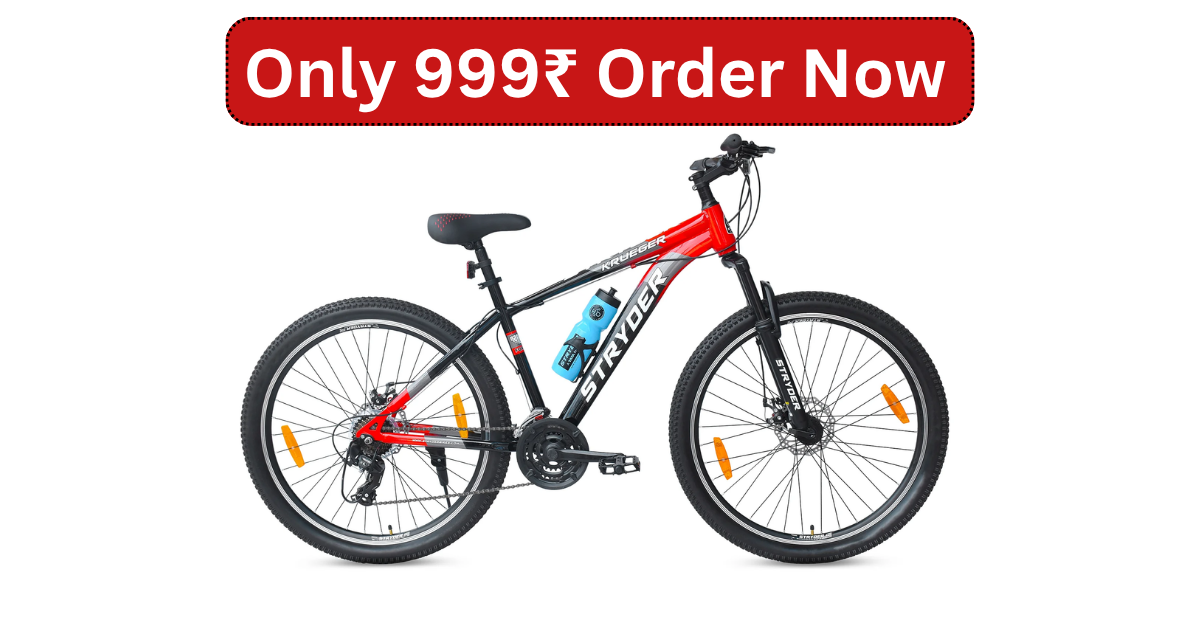
Let us face a brutal truth right at the starting line. Walking into the Indian electric vehicle market today is like stepping into a high-stakes tech casino. Everywhere you look, glossy banners promise absolute miracles for pocket change. For the average commuter, student, or parent looking to cut down on daily petrol expenses, the promise of an electric bicycle is incredibly tempting. No registration, no driving license, zero tailpipe emissions, and a running cost that makes a joke out of standard fuel prices. Naturally, your eyes drift toward a very specific sweet spot: a four-figure budget.
You open up Google, type in the phrase best ecycles under 10,000, and expect a curated list of flawless machines waiting to be delivered to your doorstep. But as an automotive journalist who has spent over a decade testing everything from raw-power electric supercars to micro-mobility scooters, this is where I must step in and pull back the curtain.
At first glance, a price tag below ten thousand Rupees looks perfect. But is it a genuine urban mobility solution, or are you setting yourself up for a heartbreaking mechanical failure? This is where things get interesting, and frankly, a little complicated.
The Reality Check Behind the Budget
When you sit behind the editorial desk of a premium automobile magazine, your job is to separate engineering facts from clever marketing fiction. The hard engineering truth is that building a reliable electric vehicle requires a certain base cost. You need a motor, a battery pack, a controller, a sturdy frame, and dependable brakes.
To give you an honest overview of the market, a production-ready, branded electric cycle from established players like Hero Lectro, Geekay, or Voltebyk typically starts anywhere between twenty-two thousand and thirty-five thousand Rupees. So, what exactly is happening in the under ten thousand Rupee segment?
If you are strictly limited to a four-figure budget, your path splits into two very distinct territories. The first consists of ultra-budget entry-level imports or white-label generic e-bikes that pop up on wholesale e-commerce platforms. The second, and arguably the most practical path, involves electric cycle conversion kits. These kits allow you to retro-fit an existing mechanical bicycle into a fully functioning battery-powered commuter.
Before you pull out your wallet, we need to dive deep into the design, physics, engineering limitations, and real-world performance of what a sub-ten thousand Rupee electric mobility setup actually looks like on chaotic Indian roads.
Structural Integrity and Frame Design
When reviewing any vehicle, my evaluation always begins with the chassis architecture. In the premium space, we look for hydro-formed aluminum alloy frames that offer a beautiful balance of lightness and structural strength. However, when searching for the best ecycles under 10,000, you have to adjust your expectations.
At this price point, high-tensile carbon steel is the absolute king. Steel frames are incredibly durable and can take a massive beating from deep potholes, unexpected speed breakers, and heavily rutted tarmac. The material flexibility of steel means it absorbs sharp road vibrations reasonably well, preventing those nasty shocks from traveling straight up your spine.
But here is the catch. Carbon steel is heavy. A typical budget steel e-cycle or a standard commuter bicycle fitted with an electric kit will easily tip the scales between twenty-two and twenty-seven kilograms. In the automotive world, weight is the ultimate enemy of efficiency.
When you look at the exterior profile of a budget e-bike or a DIY kit setup, the aesthetic is purely utilitarian. You will not find sleek, seamless tubes with internal cable routing. The wiring harness is usually secured along the down-tube using heavy-duty zip ties or plastic clips. The battery pack is rarely integrated into the frame tube; instead, it is bolted onto the water bottle mounts or strapped to a heavy rear luggage rack. It looks industrial, raw, and unrefined.
Component Layout and Ergonomics
Step closer and look at the control interface. A world-class e-bike relies on clean integration, but budget-conscious options prioritize functional survival. The handlebar area is typically a busy space. On the right side, you will find a basic twist-grip throttle or a thumb throttle made of hard composite plastic. Right next to it sits a rudimentary battery level indicator—usually a small plastic housing with three or four colored LED lights indicating full, half, or low battery status.
The saddle is another area where cost-cutting reveals itself. Budget models frequently come with generic foam saddles mounted on a standard steel seat-post. For short three to five kilometer bursts, this is perfectly adequate. However, if you plan to spend an hour navigating through dense metropolitan traffic, you will quickly find yourself shopping for an aftermarket gel seat cover.
Wheel sizing in this specific price category is almost universally standard at twenty-six inches. You get traditional steel or basic alloy rims laced with heavy-gauge spokes. The tires are typically wide-profile nylon commuter rubber designed more for longevity than high-performance grip.
Powerhouse and Powertrain Specifications
Let us talk about the heart of the machine: the electric powertrain. In this ultra-budget domain, you will not find sophisticated mid-drive motors that sit at the crank and balance the center of gravity. Instead, the engineering choice is completely dominated by the rear hub motor.
A standard setup features a 250-Watt Brushless DC (BLDC) hub motor laced directly into the rear wheel. On paper, 250 Watts does not sound like much, especially when compared to high-power electric scooters. However, for a vehicle that weighs under thirty kilograms, it provides a surprising amount of low-end assistance.
+---------------------+---------------------------------------------------------+
| Feature             | Specification Detail                                    |
+---------------------+---------------------------------------------------------+
| Motor Type          | 250W Brushless DC (BLDC) Rear Hub Motor                 |
| Battery Chemistry   | Lithium-ion (Li-ion) / Lead-Acid (Variant Dependent)    |
| Voltage Configuration| 36V System (Standard) / 24V System (Ultra-Budget)       |
| Battery Capacity    | 7.5 Ah to 15 Ah                                         |
| Top Speed           | 25 km/h (Electronically Governed)                       |
| Throttle Type       | Twist Throttle or Thumb Throttle                        |
+---------------------+---------------------------------------------------------+
The system voltage is where you need to look very closely at the specification sheet. While entry-level branded e-bikes utilize a 36-Volt architecture, the absolute cheapest models hovering near the ten thousand Rupee mark occasionally drop down to a 24-Volt setup to save manufacturing costs.
A 24-Volt system draws less current and feels notably more sluggish when trying to accelerate from a dead stop. If you face a steep flyover or a sudden incline on your daily route, a 24-Volt powertrain will require significant pedal input from your legs to keep moving forward. A 36-Volt system, on the other hand, provides a much healthier torque delivery, allowing you to cruise up moderate inclines with minimal effort.
The Critical Battery Battle: Lithium vs Lead-Acid
This is where things get genuinely critical. The biggest engineering challenge of any electric vehicle is the energy storage unit. When analyzing the best ecycles under 10,000, you will run into a major fork in the road regarding battery chemistry.
To hit a four-figure price target for a complete, pre-assembled e-cycle, some off-brand manufacturers rely on old-school Valve Regulated Lead-Acid (VRLA) batteries. These are essentially deep-cycle batteries similar to what you find in home inverters, just scaled down.
Lead-acid batteries are remarkably cheap to build, which is how these vehicles manage to stay under the ten thousand mark. But from an expert’s perspective, lead-acid comes with massive real-world penalties. They are incredibly heavy, adding an extra eight to twelve kilograms to the bike. Furthermore, their usable lifespan is quite short—typically lasting around three hundred to four hundred charge cycles before the capacity drops off a cliff.
This is exactly why most knowledgeable riders lean toward the conversion kit route. A high-quality DIY kit under ten thousand Rupees allows you to bypass lead-acid entirely and source a small, lightweight Lithium-ion (Li-ion) pack, often using a 36-Volt, 7.5 Amp-hour configuration.
A lithium pack weighs a fraction of a lead-acid setup, charges much faster, and easily lasts for eight hundred to twelve hundred full charge-discharge cycles before showing signs of degradation. In simple terms, while a lead-acid system saves you money on day one, a lithium-based setup will save you a fortune over two to three years of daily ownership.
Real-World Range and Charging Efficiency
Let us talk about range, because this is where marketing brochures love to stretch the truth. You will often see cheap e-cycles boasting a range of forty, fifty, or even sixty kilometers on a single charge. As a reviewer who relies on precision test instruments rather than optimistic claims, let me give you the unvarnished truth.
In the real world, your total riding range depends entirely on how you interact with the vehicle. Budget electric cycles generally offer two distinct riding modes: Full Throttle and Pedal Assist Mode (PAS).
If you decide to treat the e-cycle like a mini-motorcycle—resting your feet flat on the pedals and relying purely on the twist throttle—you are putting a massive load on a small battery pack. On a standard 36-Volt, 7.5 Ah lithium battery, a pure throttle ride in typical stop-and-go Indian city traffic will net you a realistic range of fifteen to twenty kilometers.
But if you are willing to work with the machine via Pedal Assist Mode, where the motor simply amplifies your own pedaling effort, the efficiency numbers improve dramatically. By contributing your own muscle power during initial take-offs and steep climbs, you can easily stretch that same small battery pack to cover thirty to thirty-five kilometers on a single charge.
When it comes to replenishment, charging efficiency at this price point is very straightforward. Budget setups use basic external desktop chargers that plug directly into a standard 5-Amp home wall socket. Because these systems lack expensive fast-charging circuits, a full charge from zero to one hundred percent typically takes anywhere from four to six hours. It requires some forward planning, making overnight charging the most practical routine for daily commuters.
Stopping Power and Safety Systems
Speed is nothing without control. In the automotive industry, we evaluate braking performance with absolute rigidity, and budget two-wheelers should be treated no differently.
When analyzing a vehicle in this price range, you are typically looking at two types of braking configurations. The most basic setups use traditional mechanical V-brakes operating on the wheel rim. While V-brakes are simple to adjust and dirt-cheap to maintain, their stopping power degrades significantly when the rims get wet during the monsoon season or when riding through muddy potholes.
If you look closer at slightly better-spec conversion kits or budget frames, you will find entry-level mechanical disc brakes mounted on the front wheel, combined with a V-brake or drum brake at the rear. A mechanical disc brake uses a traditional steel cable to clamp brake pads onto a rotor attached to the wheel hub. It provides a much crisper bite, better heat dissipation, and vastly superior wet-weather performance compared to a rim brake.
Beyond the physical pads and rotors, there is a vital electronic safety feature you must look for: automatic motor cutoff levers. When you pull the brake levers on a well-engineered e-cycle, a small built-in microswitch immediately cuts all electrical power to the hub motor, even if your other hand is still accidentally twisting the throttle. This prevents the motor from fighting against the brakes, reducing your stopping distance and protecting the electronic controller from dangerous current spikes.
Real-World Riding Dynamics and Suspension
How does a sub-ten thousand Rupee electric mobility machine actually feel when you take it out onto the chaotic streets of an Indian metro? The short answer is: it is a highly mechanical, connected experience.
At this price point, front suspension forks are an absolute luxury. Most options feature a completely rigid steel front fork. Without hydraulic or coil suspension to cushion the ride, the front tire is your only line of defense against road imperfections. This means managing your tire pressure is absolutely critical; running them a fraction below maximum pressure helps provide a bit of natural cushioning.
The ride quality is heavily influenced by the weight distribution of the components. If you are riding an e-bike with a front-heavy battery bag or a rear rack stacked with heavy lead-acid cells, the handling will feel slightly clumsy when making tight, low-speed turns through heavy traffic jams. It takes a few days of riding to get used to the unique momentum of a heavy budget e-bike.
Once you hit an open stretch of smooth tarmac, however, the experience becomes genuinely enjoyable. The 250-Watt hub motor hums quietly to life, and as you cross the twelve to fifteen kilometer per hour mark, you feel a welcome wave of propulsion carrying you forward. It removes the exhausting strain of head-winds and minor road inclines, allowing you to reach your destination feeling fresh and completely sweat-free.
Understanding the Financial Matrix
To give you a crystal-clear picture of what your money actually buys in this budget tier, let us break down the pricing structures, component costs, and kit variations currently available in the Indian market.
+-----------------------------------+------------------------+-------------------------------------------------------+
| Variant / Build Path              | Estimated Cost (INR)   | Core Components Included                              |
+-----------------------------------+------------------------+-------------------------------------------------------+
| Basic DIY Hub Motor Kit           | ₹5,500 - ₹7,000        | 250W Motor, Controller, Throttle, Levers, Wiring      |
| Full Kit with Lead-Acid Battery   | ₹8,500 - ₹9,500        | 250W Motor, Controller, 24V/36V Lead-Acid Pack, Charger|
| Full Kit with Small Lithium Battery| ₹10,000 - ₹11,500      | 250W Motor, Controller, 36V 7.5Ah Li-ion Pack, Charger|
| Generic Unbranded Pre-Built E-Bike| ₹9,999 - ₹12,000       | Complete Steel Frame Bike, Lead-Acid Battery System   |
+-----------------------------------+------------------------+-------------------------------------------------------+
As this detailed pricing matrix reveals, trying to buy a complete, brand-new, pre-assembled electric cycle with a modern lithium battery for under ten thousand Rupees is an almost impossible task in today’s economic landscape.
The manufacturing costs of safe lithium cells, copper-wound motors, and robust steel frames create a natural floor for retail pricing. Therefore, if you see an advertisement for a brand-new, fully assembled e-cycle priced at exactly nine thousand Rupees, you can be almost certain it is powered by heavy lead-acid batteries or uses extremely low-grade electronic components.
This is exactly why the conversion kit market has exploded in popularity across India. It represents a clever, resourceful engineering loophole. By utilizing a mechanical bicycle that you or your family already own, you completely eliminate the cost of buying a new frame, handlebars, wheels, and saddle. Every single Rupee of your ten thousand budget can be directed where it matters most: acquiring a reliable motor, a solid controller, and a safe, efficient battery pack.
Navigating the Competitive Landscape
When evaluating budget electric mobility options, it helps to understand how these entry-level setups compare to the lowest-priced branded electric cycles available in the country. The following comparison table outlines the massive engineering gaps that exist between a sub-ten thousand Rupee DIY/Generic setup and the entry-level production models from major Indian manufacturers.
+-------------------------+-----------------------------------+-----------------------------------+
| Feature / Attribute     | Best Ecycles Under 10,000 (DIY)  | Entry-Level Branded (Rs 23k-28k)  |
+-------------------------+-----------------------------------+-----------------------------------+
| Frame Material          | Existing Steel Frame / Repurposed | High-Grade Steel or 6061 Alloy    |
| Battery Integration     | External Bag / Rear Rack Mounted  | Sleek In-Tube or Detachable Click |
| Warranty Coverage       | 3 to 6 Months (Seller Dependent)  | 1 to 2 Years Official Warranty    |
| Service Network         | Local Electronic Shops / Self-DIY | Nationwide Authorized Dealers     |
| Water Resistance Rating | Basic (Needs Extra Protection)    | IP65 or IP67 Certified            |
| Brake Quality           | Basic Mechanical V-Brakes / Disc  | Branded Disc Brakes with Cutoffs  |
+-------------------------+-----------------------------------+-----------------------------------+
Looking closely at this data, the compromises of the ultra-budget path become completely transparent. When you choose to stay strictly under a four-figure budget, you are essentially trading convenience, long-term warranty security, and polished aesthetics for raw, low-cost utility.
For an experienced automotive reviewer, this is not necessarily a bad trade, provided you enter the deal with your eyes wide open. If you enjoy basic mechanical tinkering, understand standard electrical wiring, and want a simple machine for short urban errands, the budget path offers incredible value.
But if you are expecting an automotive-grade experience where you simply press a button and ride for years without ever tightening a bolt or checking a wire connection, you might need to reconsider your budget strategy.
What Happens When the Road Disappears?
One of the most revealing tests I perform on any review vehicle involves taking it out of its comfortable urban zone and pushing it into challenging conditions. For an Indian commuter, those challenging conditions arrive every single year with the monsoon season.
How does an entry-budget e-cycle handle heavy rains and water-logged streets? This is a critical question where expert knowledge can save you from a costly repair. Premium electric cycles come with certified IP65 or IP67 water and dust resistance ratings, meaning their internal connections, motor casings, and battery enclosures are sealed against high-pressure water splashes.
In the under ten thousand segment, official IP ratings are virtually non-existent. The hub motor itself is generally well-sealed by its metallic casing, but the real point of vulnerability is the external controller box and the battery connections.
If you are using a DIY conversion kit, the controller is usually housed in a simple plastic box or a fabric bag strapped underneath the saddle. During a heavy downpour, water kicked up by the front tire can easily seep into these unsealed enclosures, causing a short circuit that can fry the delicate controller board.
To keep a budget e-cycle running reliably through the monsoons, you have to apply some practical engineering workarounds. Wise owners often use high-grade silicone sealants around wire entry points, wrap their controller boxes in heavy-duty waterproof tape, and ensure the battery bag has a dedicated rain cover. It is a classic example of how a little bit of proactive maintenance can compensate for a lack of expensive factory waterproofing.
The Hidden Complexity of Refinement
As we wrap up this initial deep dive into the engineering, architecture, and financial realities of budget electric cycles, we are left standing at a fascinating crossroads. The dream of affordable, zero-emission personal transport is highly achievable, but it demands that you abandon generic marketing myths and embrace real-world engineering trade-offs.
We have analyzed the heavy nature of carbon steel frames, the performance differences between 24-Volt and 36-Volt powertrains, the critical choice between short-lived lead-acid and long-lasting lithium batteries, and the vital role of safety systems like automatic motor cutoffs. Every single choice you make within this budget segment directly impacts your daily commute.
But our investigation is only halfway complete. We have laid out the technical foundation, but we have yet to explore the precise step-by-step evaluation of the best components to choose, the real-world maintenance costs that catch owners by surprise, and the final expert verdict on who should jump into this segment and who should stay far away.
The mechanics of this budget EV world run incredibly deep. Let me know when you are ready to venture further into the second half of this guide, where we will uncover the operational secrets, ownership costs, and final recommendations that separate a brilliant financial investment from a frustrating mechanical mistake.